
Most promotional business is episodic: a trade show, a golf tournament, an anniversary. Dealership business is not. It is tied to unit volume, which means it repeats on its own schedule whether or not anyone runs a campaign.
The mechanic of the account
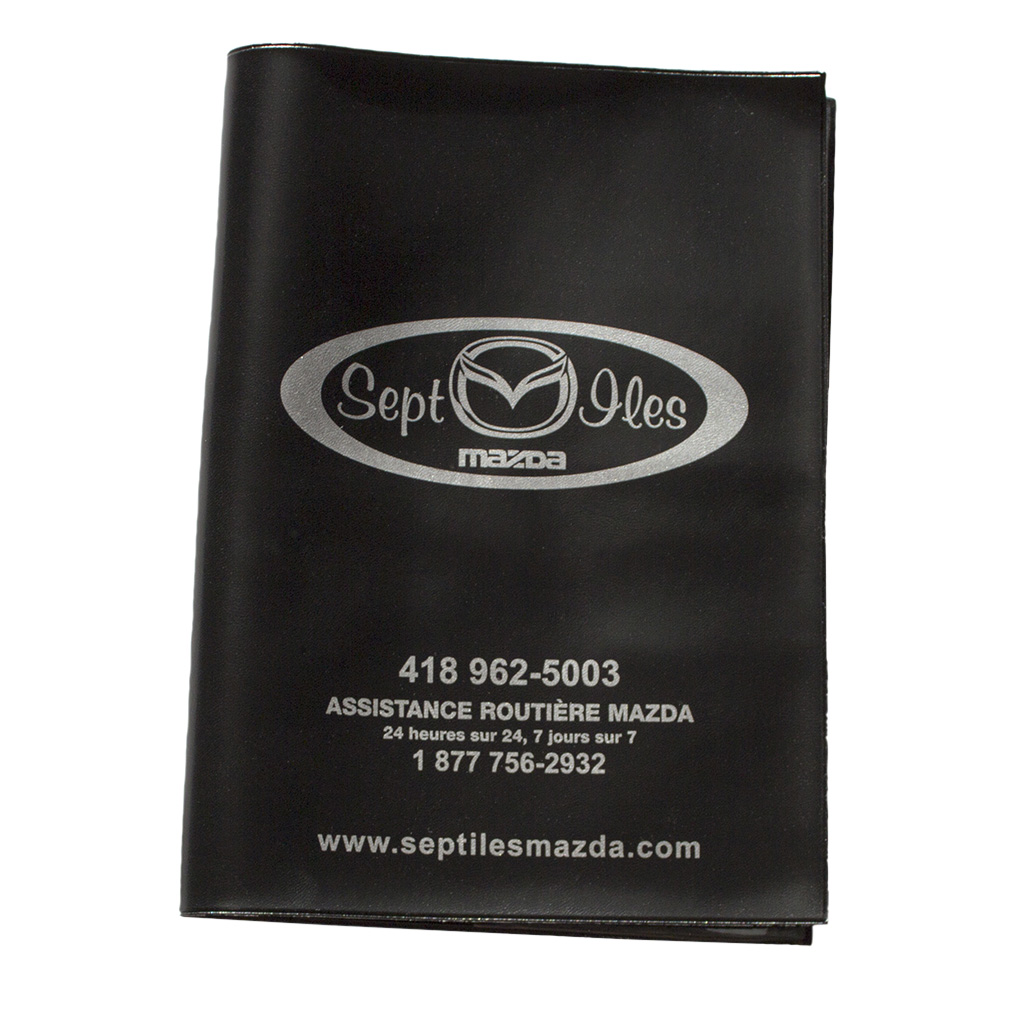
Every delivered vehicle produces a stack of paper the customer must take home: the bill of sale, the warranty booklet, the registration, the insurance slip, the financing agreement, the service schedule. Handing that over loose is not an option, so the dealership buys something to put it in. That purchase is triggered by deliveries, not by a marketing budget — which is why it survives the quarters when the marketing budget does not.
A dealership moving 60 vehicles a month consumes 720 warranty holders a year without anyone making a decision about it. Add licence holders, key tags and wheel-lock holders and the account has a floor.
It is the last object of the sale
The customer will not reread the warranty booklet. They will open that holder in a glovebox for years — at a roadside stop, at an insurance renewal, at the border. Few branded objects get that kind of dwell time, and almost none of them sit in the exact context where the next service appointment gets decided.
Which is why the useful specification is not the cheapest holder. It is the one that still closes properly in year four.
What to specify
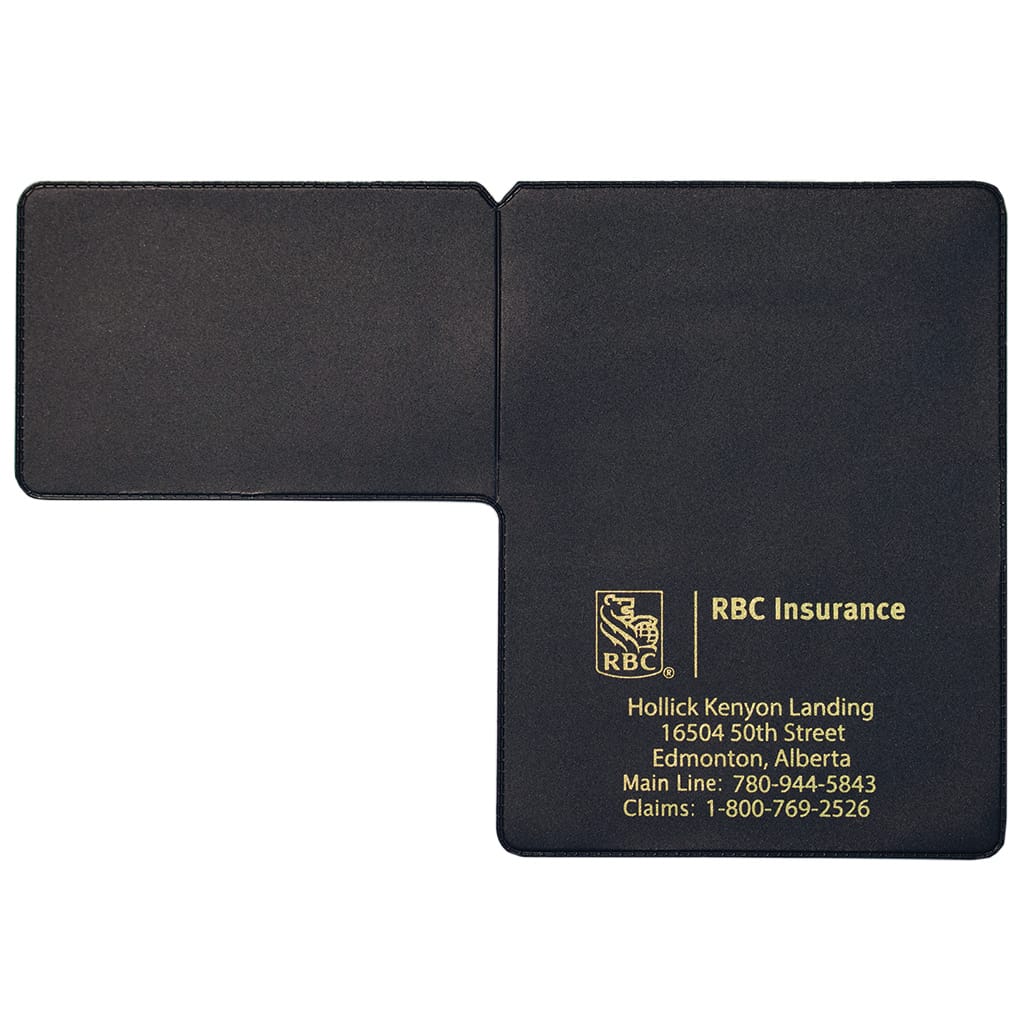
- Format follows the paperwork. Tri-fold for a full delivery package; a simple two-pocket holder where the province or state issues less; an expandable gusset where financing documents are thick.
- Material. Vinyl for volume and cleanability. Leatherette for luxury and premium franchises, where the holder is part of the delivery ceremony.
- Card pockets. A business card slot puts the salesperson’s name in the glovebox. A second slot holds the service advisor’s.
- Closure. Velcro or a flap for anything that will be carried; open-top for anything that lives in the glovebox.
- Imprint. Hot stamped foil is the workhorse. Group-owned dealerships often need the group mark and the store name — plan for two hits or a die that carries both.
The adjacent lines
Once a dealership buys warranty holders, the same buyer signs for licence and registration holders, wheel-lock holders, transit envelopes, key tags, service reminder holders and showroom display pockets. It is one relationship, one approval process, one artwork file, and a longer order line each time.
How to open the conversation
Not with a catalogue. Ask what they currently hand the customer at delivery, and ask to see it. In most stores it is generic stock with a manufacturer’s logo, or a branded item ordered three years ago by someone who has since left. Bring a stamped sample in their foil and their material — the comparison makes the argument better than a price list does.
Promotional items get budgeted. Delivery consumables get reordered. The second is the better account.