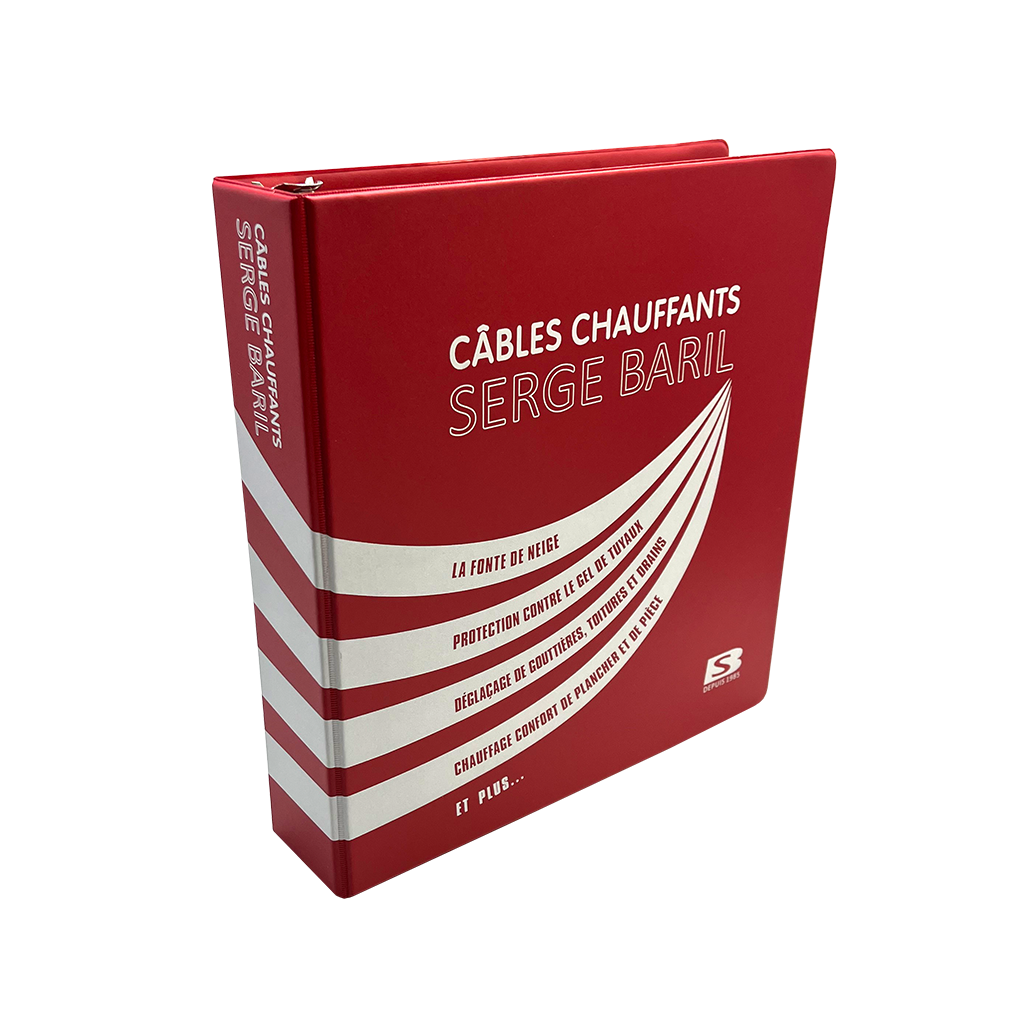
Every vinyl or leatherette product we make leaves the plant with a logo on it. The question a distributor has to answer before quoting is how that logo goes on — and the choice changes the price, the look and what the artwork needs to be. Here is how the three methods compare, in the terms our production team uses when they look at a file.
Hot stamping: foil pressed into the material
A heated metal die presses a thin foil into the vinyl or leatherette. The result is a crisp, slightly recessed impression in a solid colour — gold, silver, white, black, or one of the coloured foils in our chart (fourteen foils in stock). It is the classic finish on diploma holders, car warranty holders and policy wallets, and the one most clients picture when they say “put our logo on it”.
Hot stamping is priced per location and per colour, and each colour is a separate pass with its own die. In practice that means one logo, one colour, one position is the economical combination; a second colour or a second location roughly doubles the decoration cost. On most of our holders the imprint area is limited to about 12 square inches or 6 linear inches per location, which comfortably fits a logo and a line of text.
Artwork: vector only, solid shapes, no gradients. Fine lines under about 0.5 pt and small reversed-out text tend to fill in. If the file is a JPEG or a screenshot, send it anyway — we redraw logos as part of the free artwork support — but expect a proof rather than an instant quote.
Silkscreen printing: ink through a mesh
Ink is pushed through a fine mesh screen onto the vinyl, one screen per colour. Silkscreen sits on the surface rather than into it, so it can cover a much larger area than a hot-stamp die — a full-cover pattern, a large address block, a colour bar across the spine. Twenty ink colours are in stock and PMS matches are available for a fee.
It is the right method when the artwork is bigger than a logo, when it has more than one colour in the same location, or when the client wants a matte printed look rather than the foil sheen. Like hot stamping, each colour is a pass with its own setup, so a one-colour job stays close in price while a three-colour job climbs.
Artwork: vector, with colours separated. Halftones and gradients are possible but are quoted case by case; solid spot colours are the safe default.
Embossing: no colour at all
A die presses the logo into the material without foil or ink, leaving a raised or recessed shape that reads by light and shadow. It is the most discreet finish — the choice for leatherette padfolios, executive folders and anything meant to look like it was never “branded” at all. On coloured vinyl, an embossed logo in the same colour as the cover is almost invisible until the light catches it, which is exactly the point.
Embossing needs a die like hot stamping does, so the setup is similar; there is no colour cost because there is no colour. It is often combined with a hot-stamped line of text underneath, which our team will quote as two decorations.
Which one to quote
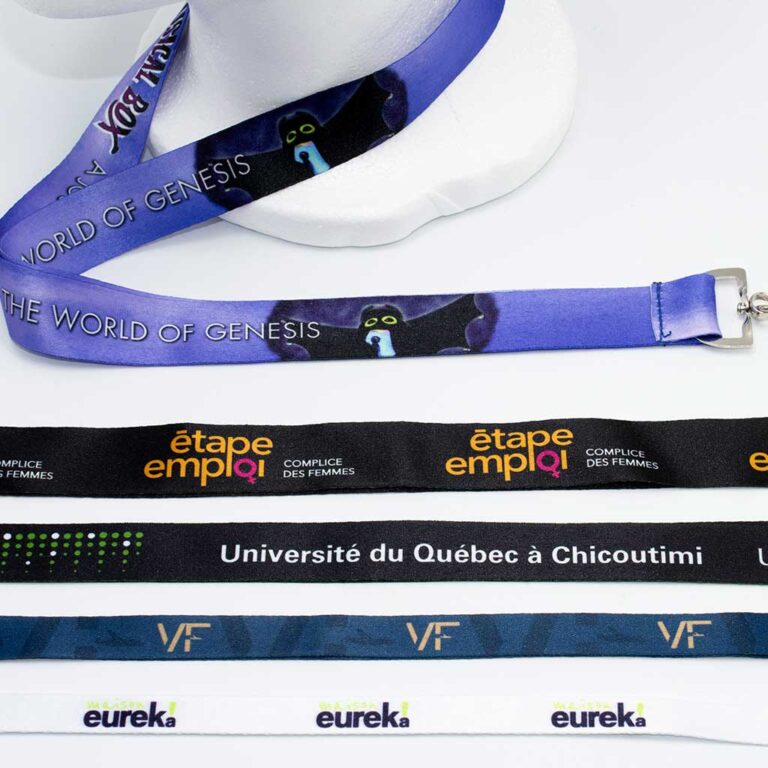
A quick rule that holds most of the time: a logo on a holder or a cover goes hot stamped; a large or multi-colour design goes silkscreen; a premium leatherette piece with a restrained look goes embossed. When a client sends a full-colour logo with a gradient, the honest answer is that it will be simplified to one or two solid colours for hot stamping or silkscreen — we provide the proof so they can see it before production, and for a true full-colour reproduction there are other product lines (sublimated lanyards, full-colour decals) better suited to it.
Whatever the method, quantity drives unit price far more than decoration does. The price list on each product page shows the unit price by quantity for each method, so a distributor can quote a 250-piece and a 1,000-piece run of the same holder without calling us. When the artwork or the location is unusual, send it over: we reply within one business day with a price and a proof.